

Signposts & Seasons No. 1
Discovering sacred questions as signposts in every season of life.


Greetings, Dear Readers!
I have been so eager to welcome you into this space. Inspired by the gift of Ignatian spirituality1, a spirituality that has been deeply nourishing and transformative on my journey with Jesus over the past few years, this is a place to pause at the end of each quarter, slowing down and becoming curious about how the language of God is forming our days and how the sacred questions that shape our souls are the signposts that turn our attention towards God’s love and steadfast care through the shifting seasons of our hearts and lives.
The Ignatian Way
At the heart of Ignatian spirituality is the gospel centered reality that our entire life is an ongoing conversation with God, for it is in Him that we live and move and have our being (Acts 17:28). Whether or not we are in a moment of active prayer, our soul is always journeying, its movements toward God or away from God. Saint Ignatius of Loyola called these movements the inner movements of the soul and distinguished them as spiritual consolation and spiritual desolation.
Spiritual consolation and desolation are both normal rhythms of the soul that ebb and flow on our journey with God. There are two ways we can look at these rhythms.
Quick note: For the purpose of beginning to notice the inner movements of the soul in our everyday lives, this quarterly space will have a greater emphasis on #2.
An inner movement of the soul that is ongoing in a specific season of life.
Saint Ignatius wrote about consolation and desolation similar to how someone today might write about seasons of the soul. In the same way someone might say, “I’m in a really spiritually dry season, it feels like God has abandoned me.”, Ignatius would say, “I’m in desolation.”, or in the same way someone might say, “Everything seems to be coming to life right now, my heart is on fire!”, Ignatius would say, “I’m in consolation!”. We will often find ourselves experiencing one of these inner movements of the soul during a sustained period of time, an ongoing movement of either consolation or desolation throughout a specific season of our lives.
Inner movements of the soul that ebb and flow daily.
While we are generally in an overarching season or state of consolation or desolation, experiencing a greater sense of one than the other in any given season, we can still experience the ebb and flow of consolation and desolation in our daily lives. We are complex beings with complex souls. We can be in a season of desolation and still experience moments of consolation. We can be in a season of consolation and still experience moments of desolation.
If you’re not already familiar with Ignatius’ Prayer of Examen2, it is an incredibly helpful resource that guides you in the practice of reviewing your day with God and noticing the moments of consolation and desolation that were a part of your day.
If you’re not sure if you are in a season of desolation or consolation, praying with the Examen can be a helpful tool in understanding what season you’re in as you begin to pay attention to the patterns of these inner movements of the soul that are driving your thoughts, actions, and responses in your everyday life.
Alternatively, if you are aware that you are in a season of desolation or consolation, the Examen can be a helpful way to begin noticing the places in your soul that are still in alignment or still out of alignment with the heart and purposes of Christ for your life. If you’re in a season of desolation, you may begin to notice the subtle ways and areas in which you are still experiencing the presence of God, the places in your soul that are still being drawn deeper into alignment with the presence of Christ. And if you’re in a season of consolation, you may begin to notice the subtle ways in which you are still pulling away from the presence of God, the places you may not have realized you’ve been out of alignment with Christ and His presence. Ultimately, the heart behind the discernment of these inner movements of the soul, a part of the larger framework of Ignatian discernment of spirits3, is that we would begin to examine our lives, notice how the Spirit is working and how the enemy is working, so that we can respond in a way that ultimately leads to deeper friendship, trust, and intimacy with God through the shifting and changing seasons of our hearts and lives.
Lastly, while spiritual consolations and desolations are not merely the moods, emotions, or highs and lows that we move through on a regular basis, they can at times overlap with them, the external circumstances and experiences of our lives drawing out deeper interior movements of consolation or desolation in our ordinary moments.
Some helpful questions as you begin to discern moments of spiritual consolation and desolation vs. natural highs and lows:
Is this experience, feeling, thought, or emotion unveiling a deeper orientation toward or away from God? Is this experience, feeling, thought, or emotion a distinct moment in my day where I felt the presence of God or pulled away from the presence of God?
If yes, you are experiencing a moment of consolation or desolation
If not, you are experiencing a normal high or low meeting you along the way.
***Attached to the bottom of this post is a free PDF that I created for my One Sacred Question community. It follows the pattern of the Ignatian Examen adapted to fit the quarterly format of this space and the unique formational pathways we journey with***
Consolations are those inner movements of the soul that turn us toward God in peace, clarity, gratitude, and interior illumination. Saint Ignatius saw these movements of the soul as divine graces flowing from the Holy Spirit. In his Spiritual Exercises4, Ignatius writes that,
consolation is when the soul is inflamed with love of its Creator and Lord… every increase of hope, faith, and charity, and all interior joy that attracts to heavenly things.
Spiritual Consolation(s)
illuminate the truth of Christ’s identity and our identity
moves us toward interior recollection of the faithfulness of God in our life
reorients our gaze toward Christ
helps us recall the presence of God in our lives
strengthens us, guiding us into deeper comprehension of the width, length, height, and depth of the love of Christ that surpasses knowledge (Eph. 3:18-19)
can be initiated by external experiences, natural highs that flow into an interior spiritual movement of consolation
are gifts that are to be received with gratitude, drawing strength from them for times of future desolation
Tenth Rule of Ignatius’ Discernment of Spirits—
“Let him who is in consolation think how he will be in the desolation which will come after, taking new strength for then.”
can be interrupted by desolation
are not feelings of constant happiness and joy removed from sorrowful or painful experiences. Consolation can be experienced in sorrow and contrition, those places where we experience the deep mercy and love of God in our weakness
Desolations are those inner movements of the soul that turn us away from God. Saint Ignatius describes these as evil spirits5, distinguishing them as thoughts and movements of the soul that God permits to come to us, but that come to us from beyond the Spirit of Truth. He writes that these are things such as,
“…darkness of soul, disturbance in it, movement to things low and earthly, the unquiet of different agitations and temptations, moving to want of confidence, without hope, without love, when one finds oneself all lazy, tepid, sad, and as if separated from his Creator and Lord.”
Spiritual Desolation(s)
distracts us from the presence of God in our lives, turning our attention toward lesser things
distracts us from our purpose in life, turning our focus toward trivial pursuits, selfish gain, and self-preoccupation
steals our spiritual imagination for hope and expectancy
should not guide our decisions
Fifth Rule of Ignatius’ Spiritual Exercises,
“In time of desolation, we should never make any change, but remain firm and constant in the resolution and decision which guided us the day before the desolation, or in the decision to which we adhered in the preceding consolation”
bankrupts our capacity to move forward
can be experienced as deceiving thoughts/thought patterns that convince us they are from God
threatens our spiritual memory, blinding us to the past and present work of God in our lives
can at times be triggered by external experiences, natural lows that overlap into the spiritual, drawing out interior desolations
can at times be interrupted by consolation
can be experienced in pleasures and pursuits that are good but disordered
can be caused by our own sin and free will, a natural response of the soul when living out of alignment with God’s purposes
can be permitted by God for our growth
Finding God In All Things
Ignatius’ framework for discernment is a framework of finding God in all things6 and moving toward a quiet attentiveness that becomes the undercurrent of our life with God. It is a framework that guides us as we learn to look deeply at our lives and pay attention to our souls as we journey in friendship with Jesus.
This space is an invitation to grow into the lived belief that there is no moment too small that is not sacred space for God to weave the secrets of the Kingdom into the fabric of our lives.
My hope is that this quarterly space will give you a glimpse of how you can integrate the elements of Ignatian spirituality and the sacred questions and colors we journey with each month (read more here) into your everyday life and begin to see them as the signposts pointing you toward God’s steadfast presence and care.
Welcome to Signposts & Seasons.
Two ordinary moments from each month, a desolation and a consolation, and the colors and questions that guided me toward deeper friendship with God.
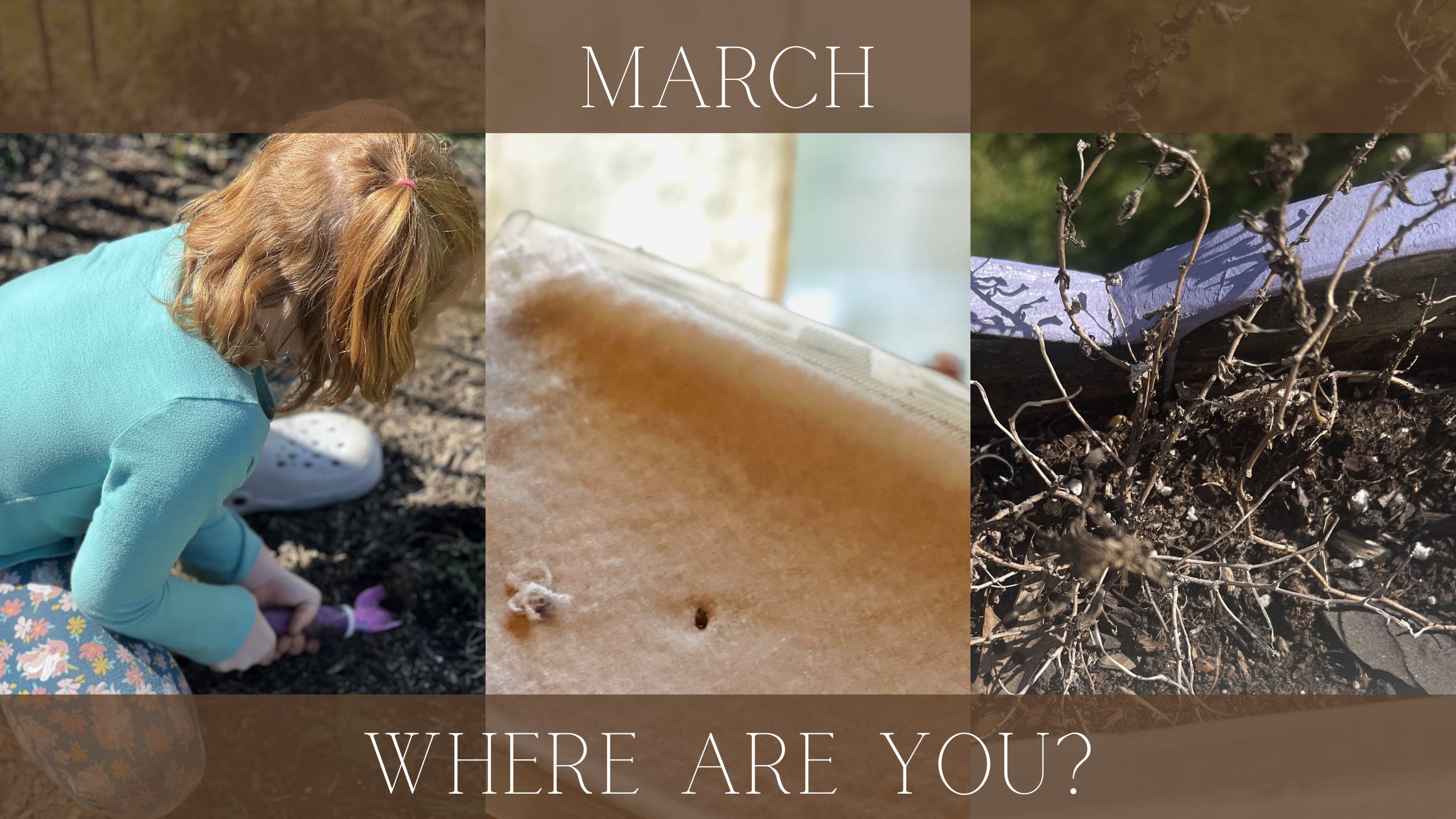
March greeted me with a dark cloud over my head, friends. As a highly sensitive person with a naturally melancholic temperament, I really struggle with the shifts that the changing seasons bring, and as someone who lives in a place that experiences all four seasons, it can be a rollercoaster. What to others may feel like subtle turns on the track, feel like whiplash to the nervous system for me. The liminal spaces trailing the end of one season into another are hard for me, leaving me feeling extremely disoriented and resistant to their arrival on the doorsteps of my heart. Marches one sacred question was extremely recalibrative for me in a season where my inner terrain was more than a little out of sorts. Appropriately, Marches sacred question color was brown, and readers, I felt every bit of that drab and lifeless color throughout the month.
Consolation— soul movement toward God:
With the exception of the bright green weeds making their annual appearance, my first workday in the garden preparing it for the season ahead was mostly surrounded by brown. As I sat there in Marches fresh dappled light, a chill still in the air, I became disproportionately overwhelmed by all the weeds that were (very) quickly waking up before the garden even had a chance to bloom (did I mention I have a melancholic temperament?). It went deeper than that, though. All of these ordinary moments do. This is the heart of Ignatian spirituality, the ordinary moments of our lives drawing out the interior movements that are so often already there. It was about the weeds, yes, but more than that, it was about all that was already stirring interiorly as I headed out to the garden that day.
As I yanked at the little green shoots poking their heads up from a blanket of brown, Marches one sacred question kept finding its way back to my heart— “Where are you?”. As I spent time talking with God, my inner terrain matching the one in front of me, my daughter came along and asked if she could help.
As we worked together in the garden, I asked her what kind of gardens she thought would be in heaven, and without a beat she said, “Our garden”. In a moment of desolation where I was quickly moving into lands of despair, the Lord used the wisdom of my 7-year-old daughter to bring consolation to my spirit and remind me that the mundane work of keeping gardens matters— the gardens of the earth and the gardens within our souls. Tending to sacred questions in a posture of interior honesty before God, allowing them to unearth what is beneath the surface, is some of the most important work we will ever do as image bearers growing in friendship with God.
Soul gardening is eternal work… and yes, pulling weeds is always part of the process.
Desolation— soul movement away from God:
On what was one of the first warm days in March, I stood at our kitchen sink washing dishes, feeling defeated in my mothering after an exceptionally hard morning of sibling rivalry and less than ideal attitudes. This is the place I come when I need to decompress, the sensory input of warm water and the bright scent of soap a gift to my quickly fraying nervous system. But as the arguing continued from the other room, an all too familiar tension began rising in my body and heart, competing against any movement towards regulation I was I was trying to gain. You mothers reading can probably guess the next part of the story.
I sent them outside.
As I stood at the sink in tears, in a moment of desolation, I noticed the dead brown plants poking up from my flower box right outside the window, Marches one sacred question rising slowly to meet me and the gentle whisper of Holy Spirit—Where are you, Lahni?
Honesty. Confession. Repentance. Returning.
As the warm water ran over my hands, so, too, did the mercy of God wash over my spirit. A moment of desolation became the pathway to consolation, an invitation to return my gaze towards the One who was already gazing upon me, longing to draw me into His presence and steadfast care.
Honorary moment:
The funniest place I met God? A zinnia seed in the dryer trap from last year.
You never know when or where the Lord will put an invitation before you to plant new seeds.
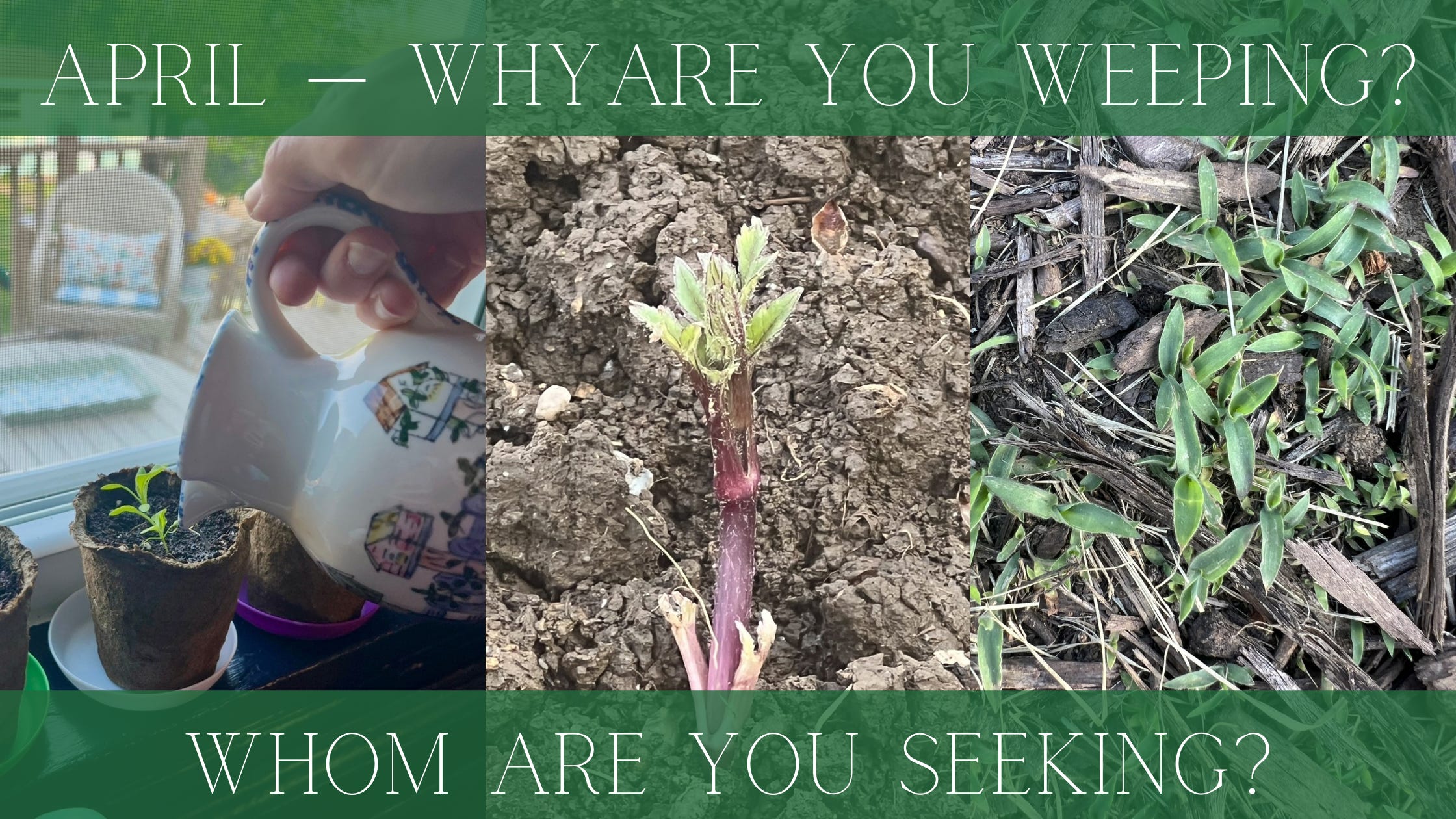
Despite the appearance of even more weeds in the garden, things did start to look up in April. Warmer days came, the school year began to wind down, garden planning was in full swing, and I began to feel the full hope of spring’s arrival. Beneath the surface, though, there was still a restlessness in my spirit that I couldn’t quite tame. There was a lot happening in the world, in our home, and many long days of solo parenting that left me feeling a bit more exhausted than normal (hats off to those of you who solo parent on a consistent basis). Though I began to move towards hope, April’s sacred question invited me to pay attention to the spaces in my life and heart that were still weary. where I was still desperately thirsty for Christ.
Consolation:
My preferred way of planting flower seeds is to direct sow them straight into the dirt of my garden, but I decided to try something new this year and start some of my flower seeds inside. I filled several small seed starting pots with soil, pressed a few tiny seeds into each one—strawflower, lace flower, and cosmos—and lined four of the light-facing windowsills in our house with a single row.
The ways the Lord used these little seedlings to console my spirit as I began each April morning, watering them and watching them grow, was such a gift. They were my little green reminders of April’s one sacred question— Why are you weeping? Whom are you seeking?
In a liminal space where I was struggling to name exactly where the restlessness in my spirit was coming from, they became, in their own liminal space between what they were as lifeless seeds in a seed packet and what they will become in the garden, touchpoints of honest conversation with God. Every windowsill became a little sanctuary, not just for the budding life within them, but for the holy curiosity that would carry me throughout the month, daily visual reminders that I am becoming, too, granting me imagination for the new life waiting to spring forth in my soul in the season ahead.
Desolation:
Japanese stilt grass. My fellow gardeners, need I say more?
If you haven’t figured it out by now, I spend a lot of time in my garden. Aside from writing, gardening is one of the things I most love to do. My prayer garden is a sacred space where I meet with Jesus, learning to slow down and become attentive to that which He is doing beyond me and within me. As I tend to the little plot of earth I call home, I become keenly aware of the ways the True Gardener is tending to the garden of my soul.
Orthodox theologian and gardener Vigen Guroian writes that, “gardening is closer to godliness than theology”7, and friend, I have found this to be exceptionally true in my own life. There are precious secrets of the Kingdom of God that I have only known by pressing a seed into the dirt, tending it, and watching it grow.
If theology teaches you about theodicy, then gardening will show you theodicy. It will show you that there is nothing untouched by the problem of evil. A highly invasive annual grass, disrupting flora and fauna, Japanese stilt grass is surely one of the effects of the fall. Dramatic as it may sound, dear reader, desolation instantly met my spirit when I saw what was surely a million little sprouts beginning to shoot forth from the earth.
I will be the first to admit that my heart and the heart of the world have much bigger problems than pesky Japanese stilt grass. But this is not about comparing or rating the severity of desolations. What I hope for you to see in these ordinary glimpses of my ordinary life, is a truth about Ignatian spirituality that runs far deeper than what is on the surface. The reality is that many of the natural desolations or lows that befall us, those things that may be seemingly insignificant in the grand scheme of things, can and often do draw out inner desolations that are already there or that the enemy knows we have a proclivity towards.
I spent 4 hours pulling up each of those little green shoots from the soil, asking the Holy Spirit for the wisdom and discernment to see the pesky weeds that were threatening the landscape of my own heart. This is Ignatian spirituality. It is the story of how God uses the ordinary things before us to reveal the inner terrain within us.
If theology teaches you about resurrection, then gardening shows you that even in desolation, He is near, that new life cannot be fully deterred by the weeds of this life.
Honorary moment:
The quirkiest reminder of God’s presence? The funny little beginning sprouts of dahlia tubers poking their heads up from beneath the soil.
Sometimes hope comes wrapped in quirky little packages.
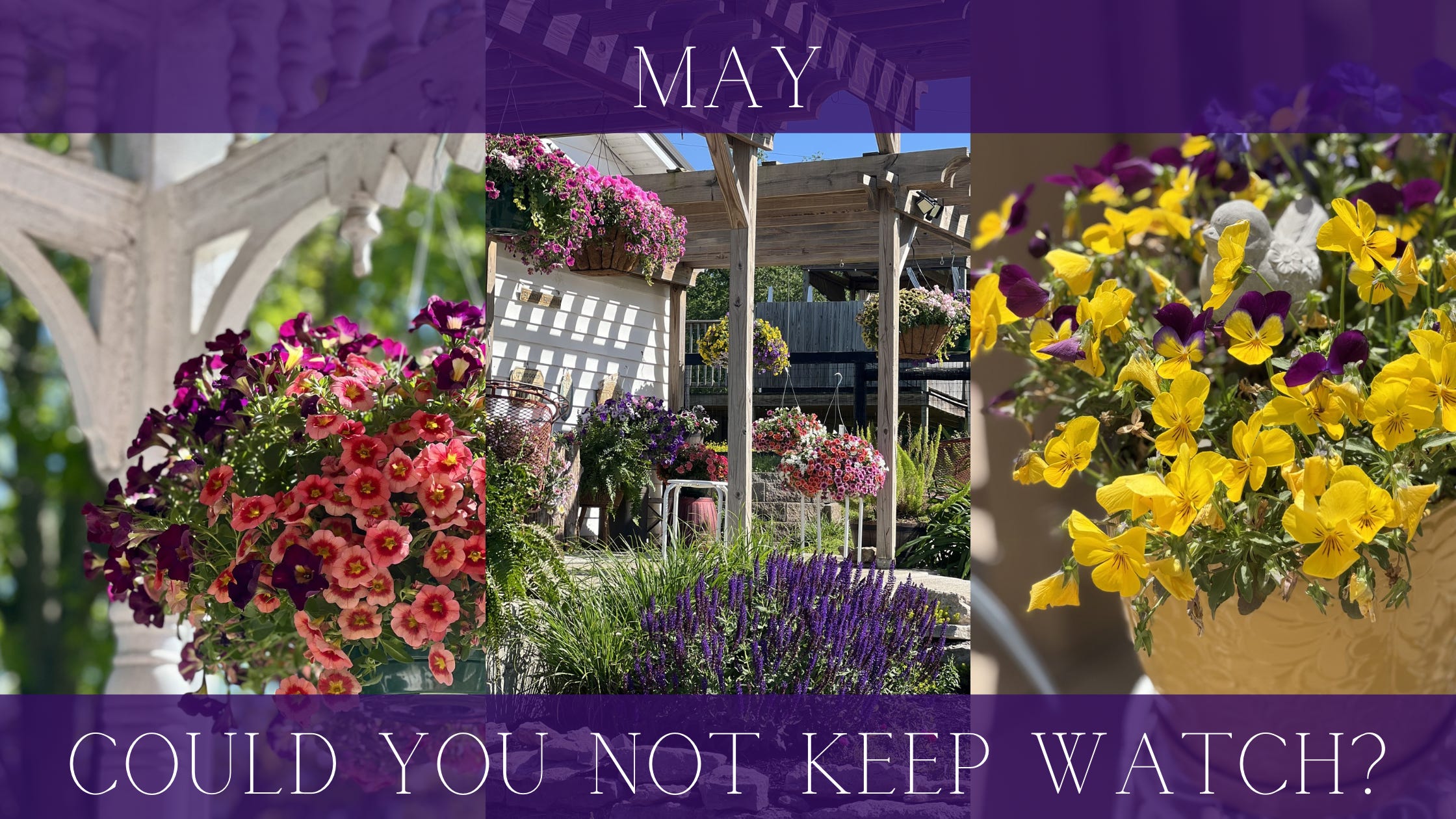
Bless the Lord, Oh my soul! May arrived on the doorsteps of my heart with fresh expectation, joy, and so many flowers. Though it was an incredibly busy month with end-of-school year field trips and awards, dance recitals, multiple family birthdays, a Kindergarten graduation for my youngest, and Mother’s Day, it was truly a sweet month. Consistently warmer temperatures finally began to set in, and we finally gotten some much needed rain (all of the gardeners said amen). I spent a lot of time in my prayer garden, watching the cherries on the tree turn fire-engine red and harvesting them for smoothies and delicious baked treats. Several pollinator friends stopped by the garden for the first time of the season and the beauty of it all made my heart hurt. In a month full of so much beauty, but that also comes with a lot of transition, May’s one sacred question met me with the invitation to stay present and keep watch with Christ in the places I was feeling a bit unsteady.
Consolation:
The hanging baskets on my front porch. On my kiddos last day of school, I went to a local farm to pick out two hanging baskets for our front porch like always do at the start of the season. I had a really hard time deciding which color palette to choose, but landed on two, teeming with deep shades of purple against a bright peachy coral.
When we got home later and I hung them up, it hit me. They were full of May’s sacred question color (deep purple) and instantly May’s sacred question met my heart— Could you not keep watch me Me for one hour?
I had a harder time recalling our sacred question in May. I’ve hypothesized that it’s because purple is my favorite color and I’m already accustomed to noticing it all the time, simply associating it with delight. Though I had to retrain my brain to recall the sacred question when I saw purple, often recalling it after the fact, I found that the Lord used that delay to meet my spirit in just the right timing.
Despite all of the beauty that May brings with her, she can still be a bit discombobulating for me. As someone who struggles with transitions and disruptions in rhythms, the start of summer break can be hard and a little disorienting for me. I absolutely love having more time with my children and there are so many gifts this season brings, but I also have a sensitive nervous system and have had to learn to go gently with Jesus, myself, and my children into this season.
These flower baskets were a testament of how Jesus longs to go gently with me, a consolation that invited me to keep watch with Him as I moved into the summer months, staying aware of all that He is showing me.
Desolation:
The little yellow pot of violas on my back porch.
Violas are hardy and can handle frost, so these were the very first flowers I sat out on our porch at the beginning of March, a little bright spot that greeted me every time I went outside.
Heading out to the back porch is often a place I will go in moments of desolation. I didn’t realize when I bought these in March that purple would be the sacred question color we’d journey with in May.
But God knew.
The ways these little purple violas companioned me in moments of desolation throughout the month, drawing my attention to the gaze of Christ and reminding me to keep watch with Him in difficult moments, was a gift I didn’t realize $6.98 could buy.
But God did.
Honorary moment:
The sweetest reminder of God’s presence? Visiting a local greenhouse and admiring all of the different shades of purple.
The glory of God is spoken in the language of flowers.

Following a similar pattern found in the ancient prayer of Examen8, this Ignatian-inspired guidebook explores how the sacred questions we journey with are the signposts pointing us towards God’s steadfast presence, love, and care. May it be a helpful guide as you learn to notice the inner movements of your own soul through the seasons of your life.

Inheriting Paradise: Meditations on Gardening
Refer to footnote #2
This is all so rich and beautiful. The small doses of this that have been introduced to me, have been really beautiful so I really appreciate how you've laid this all out, Lahni! Thank you! Thanks for all the resources too. If you had a book to recommend, what might that be? (Or seems like you should write one!)
Thanks and blessings!
Lahini, this is beautiful. I love your focus on Ignatian prayer and 'The gospel centered reality that our entire life is an ongoing conversation with God, for it is in Him that we live and move and have our being (Acts 17:28).' I love your connection with nature and the seasons too, which is so grounding and important for us all. Thank you for sharing these inspirations, I'll look forward to more.